


Never has my memory dulled of those bitter lessons I learned during my first attempt to grocery shop with children. Sometime in the period leading up to that fateful day, my toddler must have nurtured an affection for tomato sauce, for at the sight of it he sprung from his perch upon the grocery cart and swiped a glass bottle of Ragu clean off the shelf. The mess in Aisle Five marked the first in a series of exhausting challenges—the accidental theft of items my children pocketed when I wasn’t looking, my stealthy burial of their favorite items in the cart, doing battle with their urge to open the packaging of every item, and so forth—all of which I tried in various unsuccessful ways to overcome until ultimately resigning myself to never again mix kids with Kroeger.
But in time, even grocery shopping alone proved a burden. Someone would have to watch the children, which was always a hassle to organize. And I lacked the culinary instinct to overcompensate for ingredients that I learned were out of stock only once I arrived at the store. So there I’d be, lost in the wrong aisle, Googling acceptable substitutions or even new recipes entirely. On easy weeks, I was spending upwards of two hours at the grocery store, not including the commute to and fro or the time it took to find recipes and write up a list—easily another hour, but often more. When I was really trying to get a handle on recipes, I was spending at least four hours a week on all things grocery-related.
Here was an inefficiency I knew I could improve. Although figuring out my fix was itself a time investment, I now spend a total of about thirty minutes on groceries every month. It is glorious and I am proud as a peacock to share it with you. There are three essential parts: building a meal plan; developing a paper and digital list system; and availing oneself of curbside pick-up or grocery delivery services.
While meal planning is really the first step to undertake, building that schedule takes time, which dissuaded me for many years. I presume I am not alone in this. So, in an effort to wet your appetite for meal planning, let me begin with the glories of modern-day lists, which greatly reward those who plan ahead.
I maintain two types of lists. The first is digital and exists in my grocery store’s app. Here, it is important to choose a store that delivers groceries, or that at least does curbside pick-up—anything to avoid bringing the kids into the store! Since I live in a rural area, delivery is well worth the twelve dollars Walmart charges me for it every month (and which I subtract from the cost of the unnecessary goodies I would have been enticed to purchase inside). The Walmart grocery app allows me to build lists, so I built one for each of the eight weeks in my meal plan:
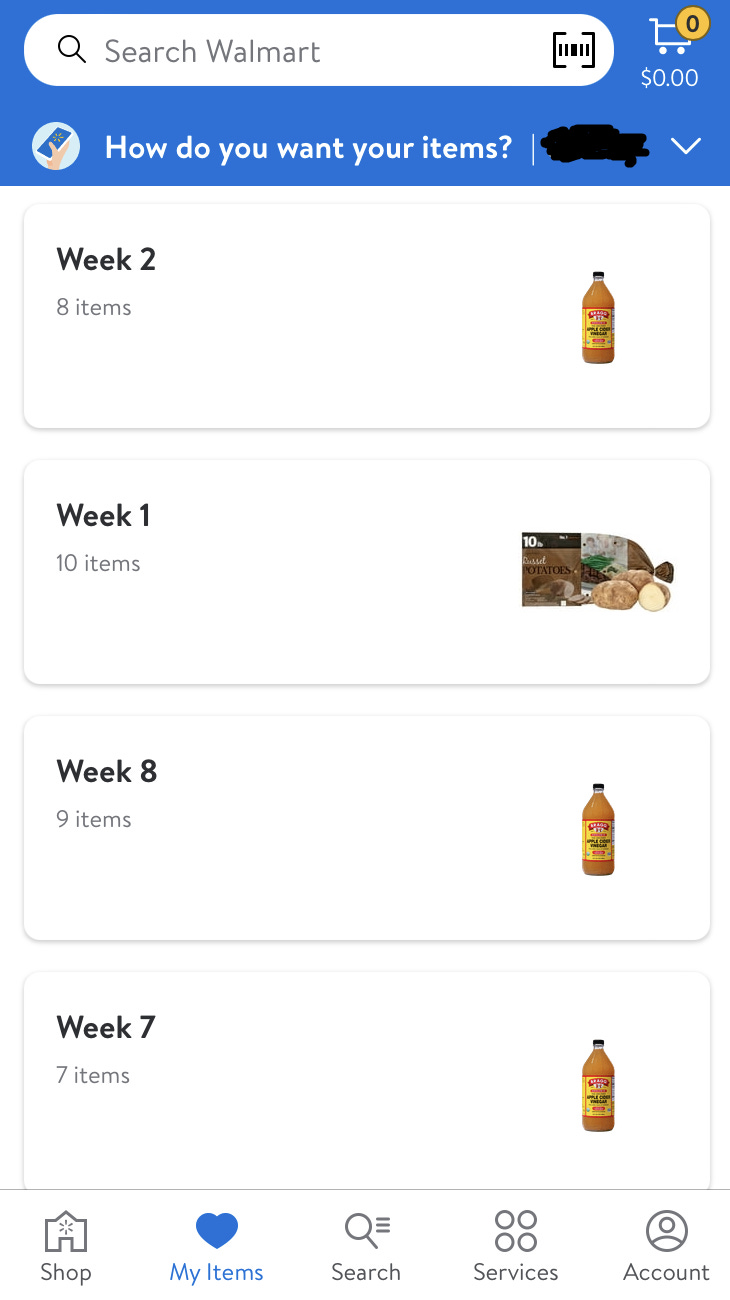
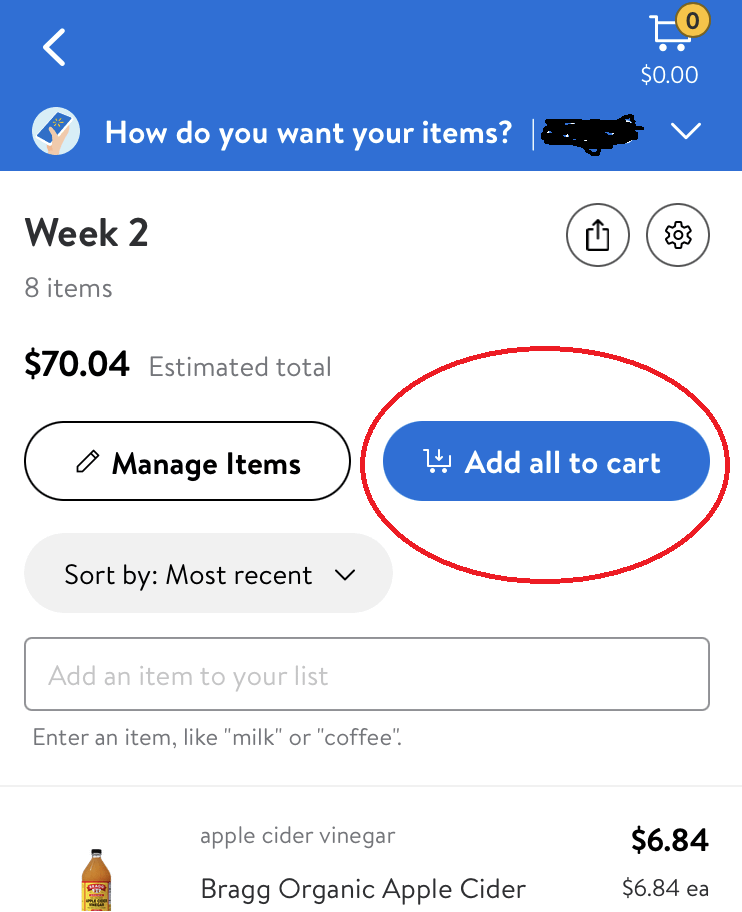
Once you populate each week’s groceries into separate lists, you can simply upload the ingredients of whatever week you’re on into your cart with the click of a button, like the one circled below in red:
That almost takes care of all your grocery needs. There are, however, certain pantry items that also need replenishing from time to time. For these, I keep a separate paper notepad in one spot that everyone knows about. The golden rule in our house is that once an item is half-way done, the last person to use it needs to add it to this list. I have tried to stretch items further than that but have always found it does not work. This notepad is also useful for miscellaneous household items that my grocer offers. Before submitting my order, I simply add the page of my items on the paper list to my digital shopping cart, remove and toss the paper from my notepad, and schedule my delivery.
I keep track of the week I am on in our meal plan using a dry erase board someone gave me, as seen below. I used permanent Sharpie to write the unchanging parts (namely, the ‘we’re on week’ and ‘notes’ headings, which can be removed with rubbing alcohol if need be). But for the changing weeks and notes themselves, I used dry erase marker.
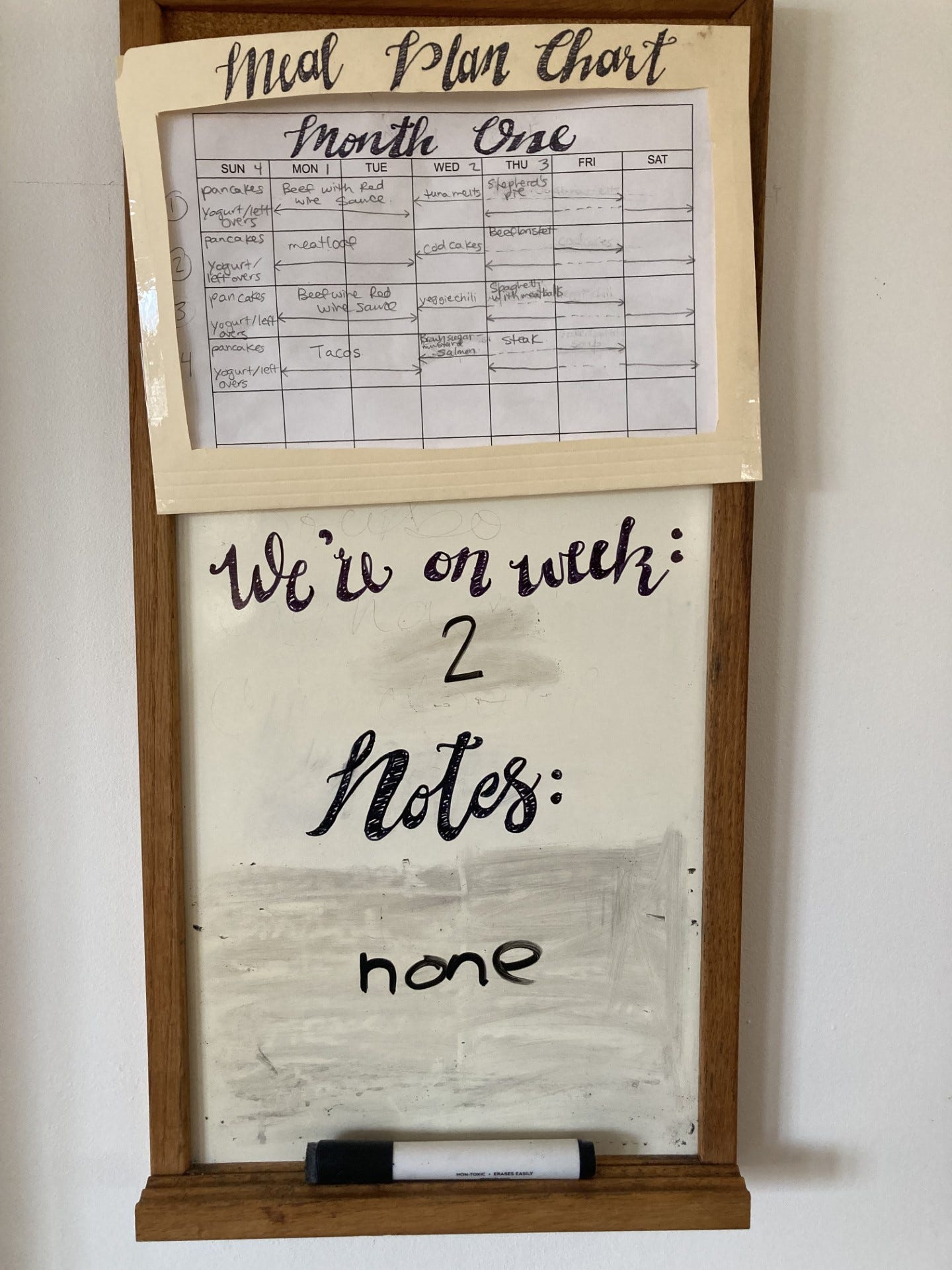
Tacked onto this board is my current meal plan, which I keep in a manila folder with the edges taped together and the face of one side removed. I am presently revising this meal plan and will share the final result in a separate post. My revised plan will include a two-month schedule of recipes (with links!) for every breakfast, lunch, and dinner, plus a rotation of snacks and sides. This particular plan requires cooking three meals a week. (Some meal planners prefer to cook everything at once and freeze it, which I have yet to attempt for fear that freezing will change the texture of some foods).
Were you to live right beside your preferred grocer, I estimate that my system would save you at least an hour each week, supposing you are already really efficient. For people like me, who live at some distance from their grocer, you can expect to recuperate something in the neighborhood of three hours or more each week just on your commute and shop, to say nothing of your planning time.
But it is not only time that matters. It is also energy. Meal plans and lists reduce decision fatigue. Delivery avoids the labor of herding the cats in and out of the car and store. With these methods, so little time and energy are needed as to be tantamount to striking this responsibility altogether. I ask you: what scholar, let alone parent, could not use more of that?